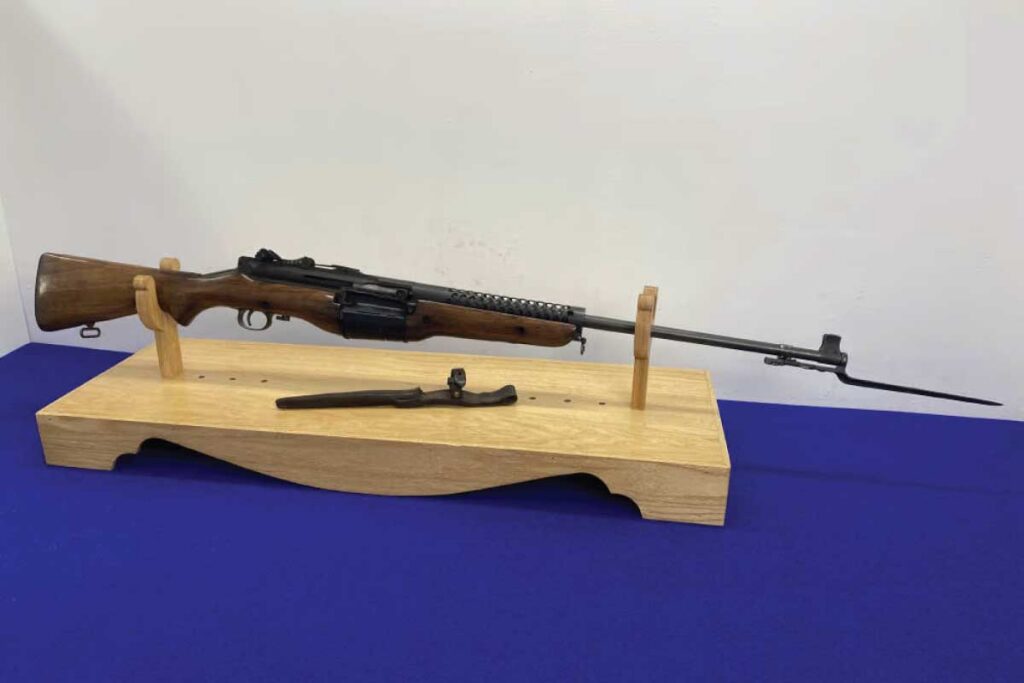

The Johnson Automatics Model of 1941 occupies a singular place in American military history: it is the semi-automatic rifle that never got the chance it deserved. Designed to rival the M1 Garand for adoption as America’s standard-issue infantry rifle, the Johnson lost that fight before the first shots of World War II were fired. Yet the rifle it produced was so mechanically distinctive, and so limited in number, that it has since become one of the most sought-after American military longarms of the era. That’s precisely why there’s a first-year example being offered in this month’s Collector’s Elite Auction.
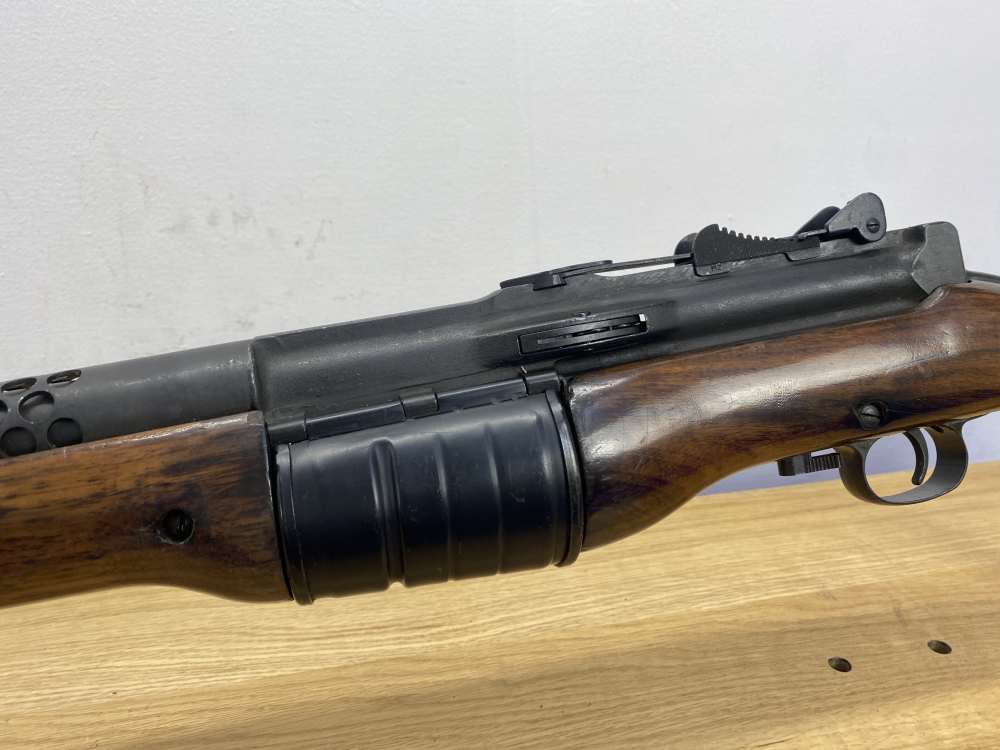
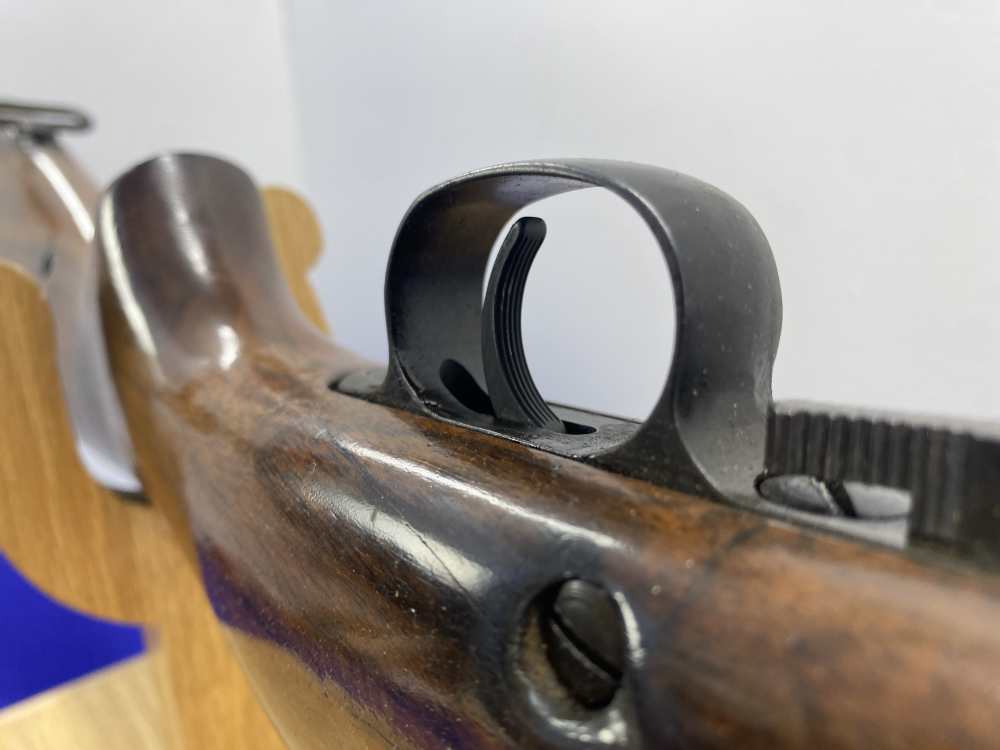
This particular rifle, serial number A3735, carries the “A” prefix that identifies it as a 1941-production gun — the very first year Johnson rifles left the factory. It is chambered in the same .30-06 Springfield cartridge issued to Garand-equipped troops, ensuring it could draw from standard-issue ammunition despite its unconventional design. The rifle wears a 22-inch, air-cooled barrel finished in a mix of Parkerizing and blue, features a protected blade front sight paired with an adjustable aperture rear sight, and is fitted with a smooth walnut pistol-grip stock and forearm. This example ships with its original bayonet and holster, adding further context and completeness to an already historic package.
The Rifle Melvin Johnson Built to Compete
The story of the Model 1941 begins with Melvin Johnson: a Marine officer, lawyer and gun enthusiast who was unconvinced that John Garand’s gas-operated design would hold up to the inconsistencies of wartime ammunition. By February 1936 — the same year the Army adopted Garand’s rifle — Johnson had already built a working prototype of his own short-recoil-operated action, featuring a rotating bolt with an unprecedented ten locking lugs. He filed for a patent that April, completed a full prototype by August, and spent the next several years refining the design, including an early R-14 variant built to accept a sword bayonet in the pattern of the M1905. Despite the ingenuity of the design, the Army trials didn’t go Johnson’s way, and the Garand remained the standard.
That didn’t stop the Johnson rifle from seeing combat. Limited quantities made their way into the hands of U.S. Marine Corps Paramarines and Raider battalions in the Pacific theater, prized for the rifle’s quick-detachable barrel and unusual rotary magazine, which — unlike the Garand’s fixed en-bloc clip — could be topped off with loose rounds at any time, even mid-magazine. Total production of the Johnson rifle is generally estimated at around 30,000 examples, a fraction of the millions of Garands that rolled off the line, which has only deepened the Johnson’s appeal to serious collectors of World War II small arms.
Today, a first-year Johnson Model 1941 like this one represents something rare on two fronts: it’s a firearm that tells the story of the “rifle that could have been,” and it’s a physical artifact from the earliest days of a production run that never reached mass scale. For collectors of American military ordnance, GI-issue semi-automatics, or the broader story of WWII small arms development, the Johnson rifle stands as a fascinating counterpoint to the Garand’s dominance — proof that history sometimes comes down to a single trial board’s decision. Bidding is open now in the Collector’s Elite Auction.